Nirmana Tekstur
NirmanaMemuat gambar...
Memuat gambar...
Memuat gambar...
Klik gambar untuk zoom
"
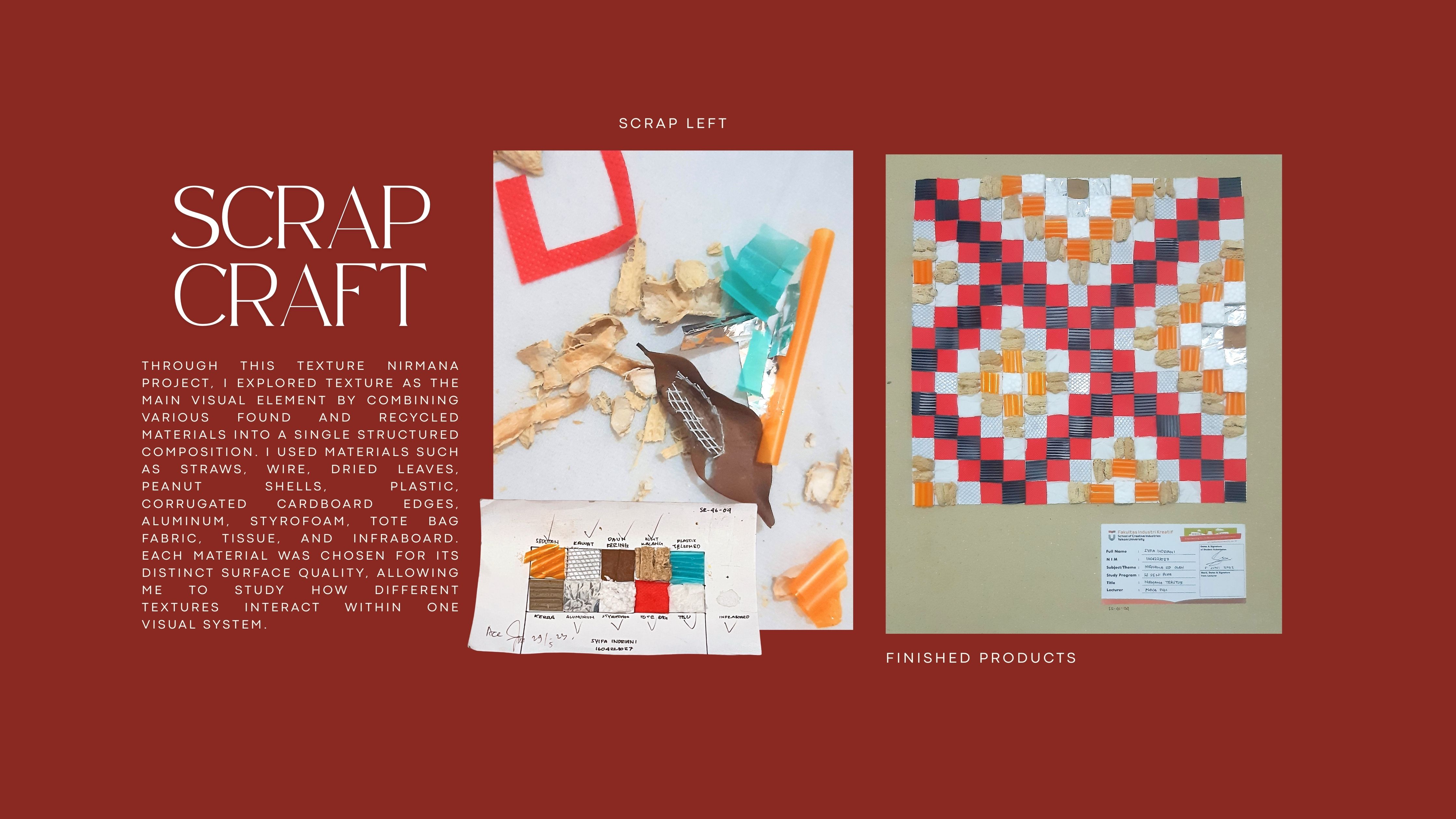
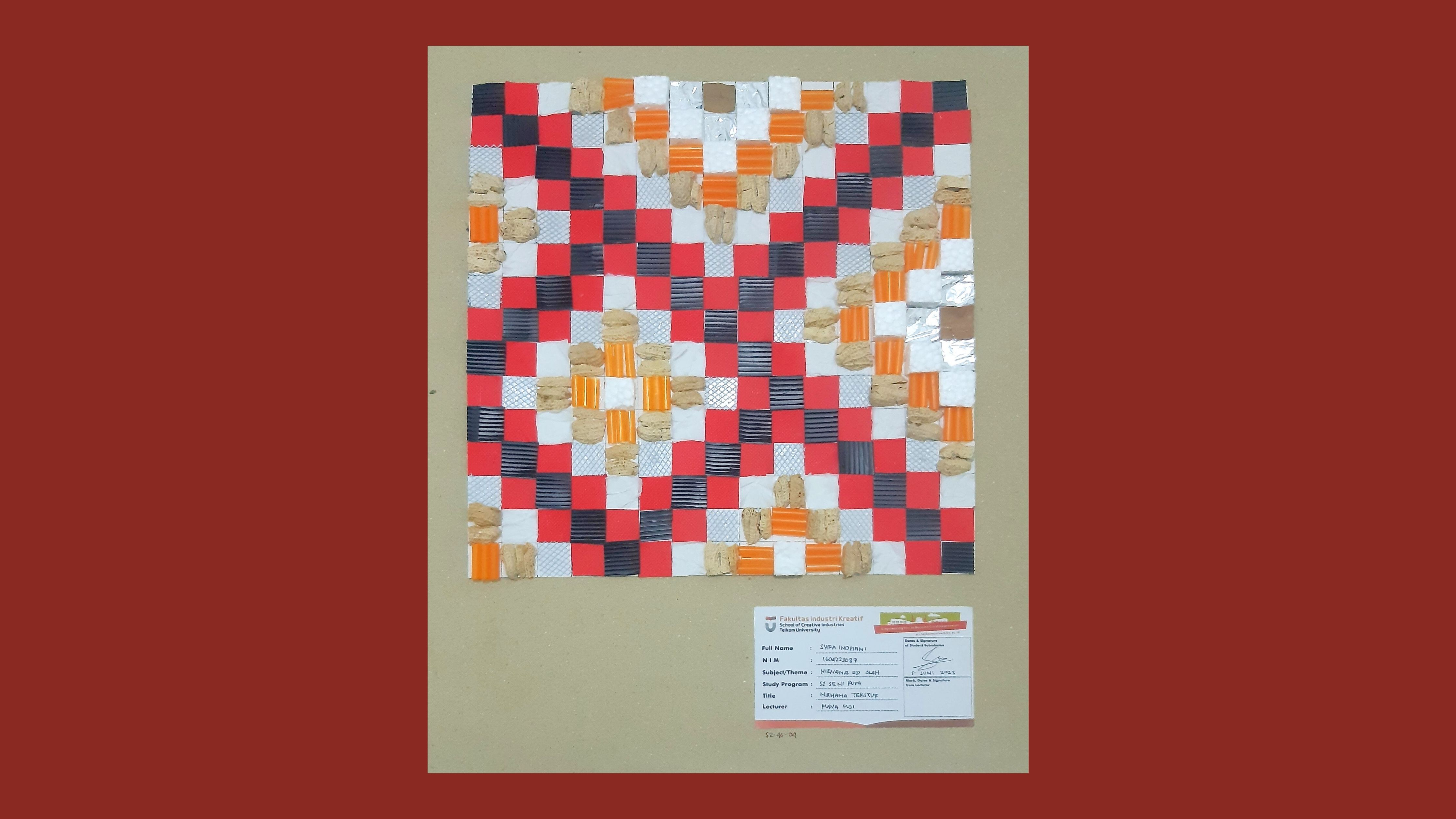
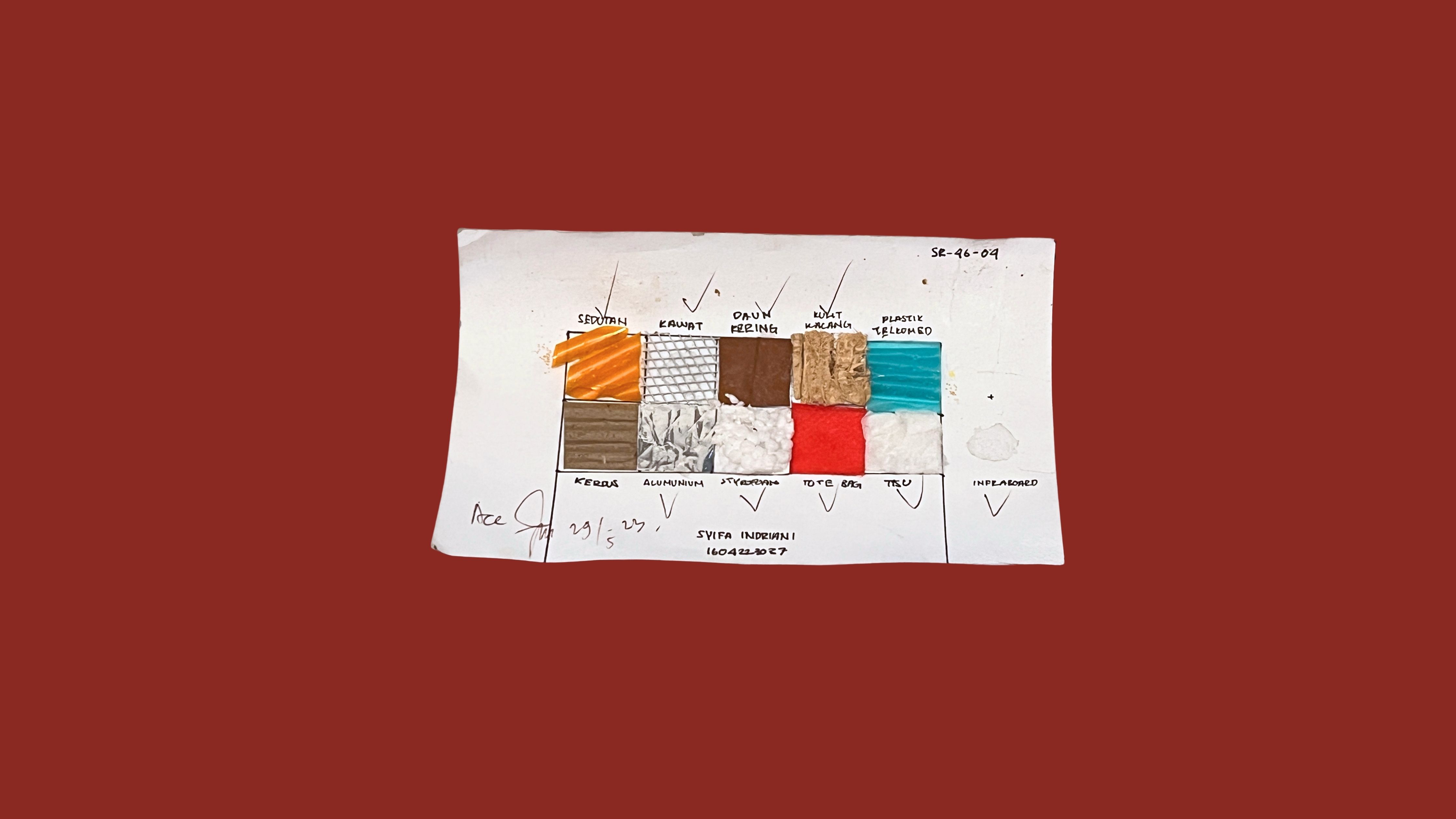
Through this texture nirmana project, I explored texture as the main visual element by combining various found and recycled materials into a single structured composition. I used materials such as straws, wire, dried leaves, peanut shells, plastic, corrugated cardboard edges, aluminum, styrofoam, tote bag fabric, tissue, and infraboard. Each material was chosen for its distinct surface quality, allowing me to study how different textures interact within one visual system. In the exploration stage, I observed and compared the tactile and visual characteristics of each material, such as rough and smooth surfaces, rigid and flexible forms, as well as matte and reflective qualities. These observations guided me in arranging the materials into repetitive units so that the composition remains organized despite the diversity of textures. The goal was to create balance and rhythm without letting one texture dominate excessively. During the making process, precision and control were important to maintain consistency in size and placement. Even though the materials varied greatly, I focused on structuring them within a grid to create visual order. This approach helped unify contrasting textures and allowed the viewer to experience variation within a cohesive composition. The finished work presents texture nirmana as an exploration of material contrast and visual harmony. Through this project, I developed a deeper understanding of how texture can function as a compositional element, not only through touch but also through visual perception. Working with diverse materials trained me to be more sensitive to material characteristics and more intentional in combining them into a unified visual structure.
Syifa Indriani•4 Februari 2026
Credits / Team
S
Syifa Indriani
Artist